Active colonies of stinging insects create acute structural risks and severe health hazards across Greater Cincinnati neighborhoods, particularly in historic multi-story wood and brick homes. In areas like Hyde Park…
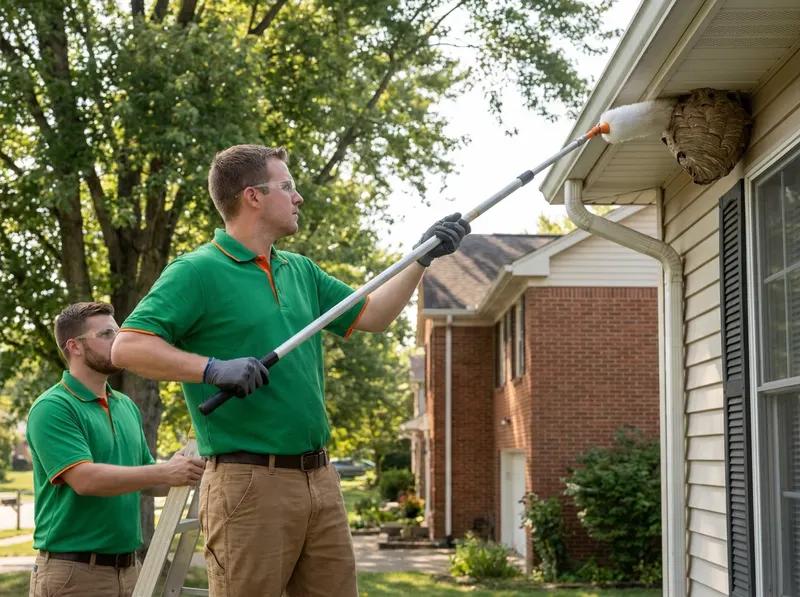
Active colonies of stinging insects create acute structural risks and severe health hazards across Greater Cincinnati neighborhoods, particularly in historic multi-story wood and brick homes. In areas like Hyde Park and Mount Lookout, bald-faced hornets routinely construct paper-carton nests high in the canopies of mature oak trees or along second-story eaves near Ault Park. Meanwhile, historic brick structures in Over-the-Rhine and Clifton frequently harbor European hornets and aerial yellowjackets inside unsealed masonry weep screeds, soffit gaps, and dormant chimney flues. Ground-nesting yellowjackets exploit loose soil beds and retaining walls across sloped parcels in Mount Adams and Pleasant Ridge. Unchecked colonies compromise outdoor living zones, penetrate structural wall voids, chew through drywall paper facing, and leave homeowners vulnerable to aggressive defensive swarms. According to clinical data maintained by the National Institute for Occupational Safety and Health, venomous stings cause thousands of emergency medical visits annually, demanding surgical containment rather than retail-spray suppression.
Effective defense requires an Integrated Pest Management framework aligned with the Environmental Protection Agency IPM guidelines. Over-the-counter pyrethroid sprays often aggravate subterranean yellowjacket colonies or drive hornets deeper into home wall cavities, resulting in secondary indoor breaches. Professional intervention neutralizes the reproductive queen and the defending worker cast directly at the source. Residual formulations adhere to safety parameters established under the California Department of Pesticide Regulation chemical standards, ensuring compounds degrade predictably without lingering synthetic contaminants. Technicians verify perimeter perimeters near municipal parks and sensitive botanical zones, including locations adjacent to the Cincinnati Zoo & Botanical Garden and Spring Grove Cemetery and Arboretum, where non-target pollinators require strict protection.
Field eradication proceeds through an orderly five-stage process:
Property owners face distinct trade-offs between exterior mechanical nest removal and complex void treatments. Exterior paper wasp nests on low gutters in Oakley or College Hill demand minimal mechanical disruption, costing close to the baseline minimum. Conversely, colonies embedded inside exterior lathe-and-plaster or brick cavities in Northside require precision void injections followed by exclusion repairs, elevating labor overhead while preventing costly interior drywall repairs. Every service adheres to pollinator stewardship models defined by the Pollinator Partnership and research published by the Purdue University Department of Entomology. For properties bordering open green spaces like Eden Park or Findlay Market, preventative botanical perimeter sprays limit seasonal queen harborage. Technical standards consult resources from the Entomological Society of America, the Occupational Safety and Health Administration, and the Ohio Department of Agriculture for verified chemical dispersal methods. Homeowners can reach DesertCrown Pest Services directly at (513) 812-8085.
Every job gets a firm, written price after an on-site visit.
Tell us about your stinging insect and hornet removal job in Cincinnati and we'll send a clear, written quote, usually the same day.
 DesertCrown Pest Services