Pest control service in Cincinnati provides direct biological elimination of damaging insect colonies and nocturnal rodent populations across southwestern Ohio. DesertCrown Pest Services operates precision perimeter applications designed to halt structural degradation without long-term monthly contractual locks.
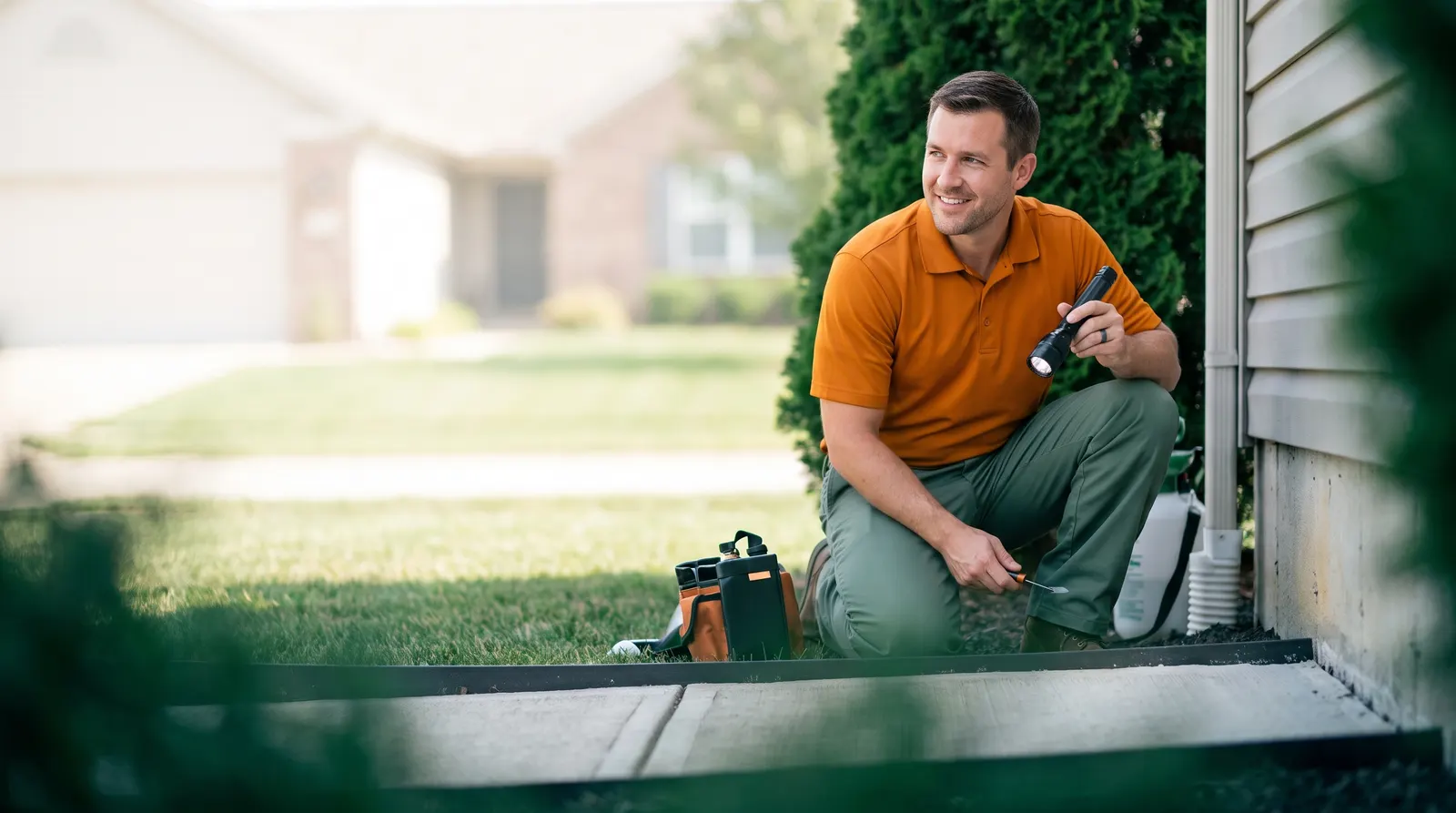
Pest control service in Cincinnati is an integrated pest management protocol that identifies structural vulnerabilities, eliminates active colonies, and establishes residual physical and botanical barriers around buildings in Hamilton County.
Every service reflects the same meticulous attention to detail, whether it's a single job or a larger pest control sevice project across Cincinnati.
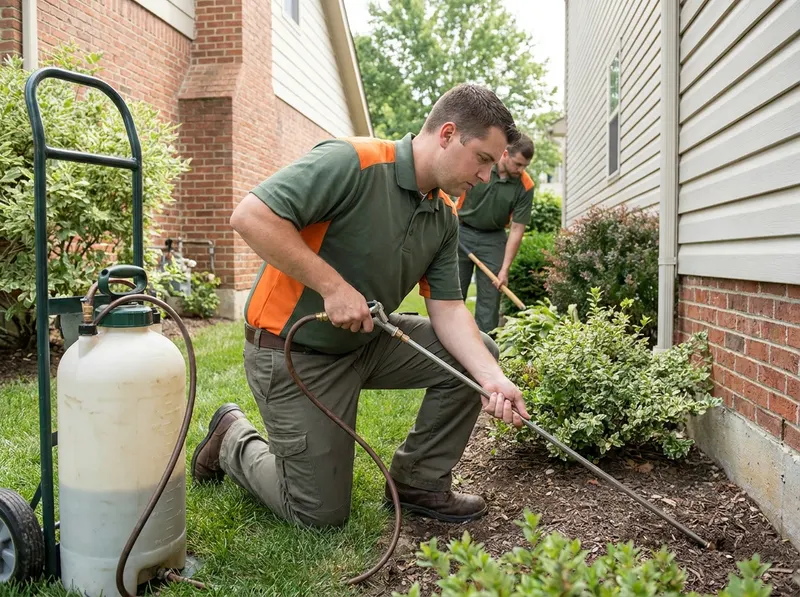
Subterranean termite treatment neutralizes Reticulitermes flavipes colonies inhabiting the dense glacial clay soils of the Ohio River basin. Technicians inject non-repellent liquid termiticides down to the footing level along exterior foundation walls or install tamper-resistant monitoring and baiting systems registered through the United States Environmental Protection Agency . This protocol disrupts insect molting cycles, halts cellulose consumption inside structural timber framing, floor joists, and subfloors, and protects long-term structural integrity. Treatment methods utilize horizontal continuous slab drilling through interior porches and perimeter trench applications measuring six inches wide by six inches deep. Soil saturation rates adhere strictly to four gallons of finished liquid termiticide dilution per ten linear feet per foot of depth, locking in a protective subterranean envelope that subterranean foraging castes cannot detect or avoid.
Get a quote →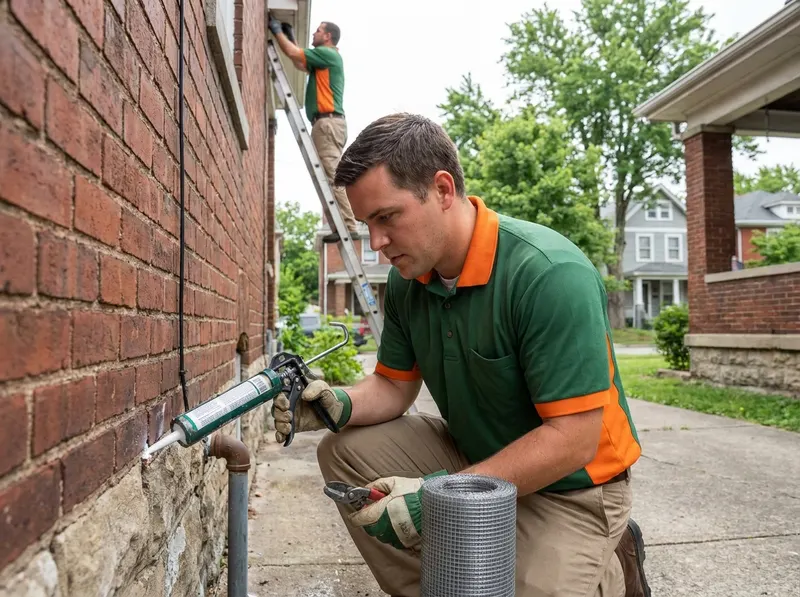
Rodent control and exclusion halts invasive populations of Norway rats, roof rats, and house mice seeking harborage in building subfloors, wall chases, and attics. The process begins with a comprehensive exterior envelope inspection followed by the installation of heavy-gauge galvanized steel mesh over weep holes, crawlspace vents, and plumbing penetrations. Internal capture networks isolate active individuals without utilizing secondary-poison rodenticide baits that could endanger domestic animals or local raptors. Technicians identify micro-openings around foundation sill plates, air conditioning line sets, and garage door weatherstripping, applying polyurethane expansion foams laced with copper mesh to halt gnawing behavior. Cleanout operations also sanitize contaminated attic cellulose insulation and remove biological allergen deposits compliant with safety guidelines issued by the Occupational Safety and Health Administration .
Get a quote →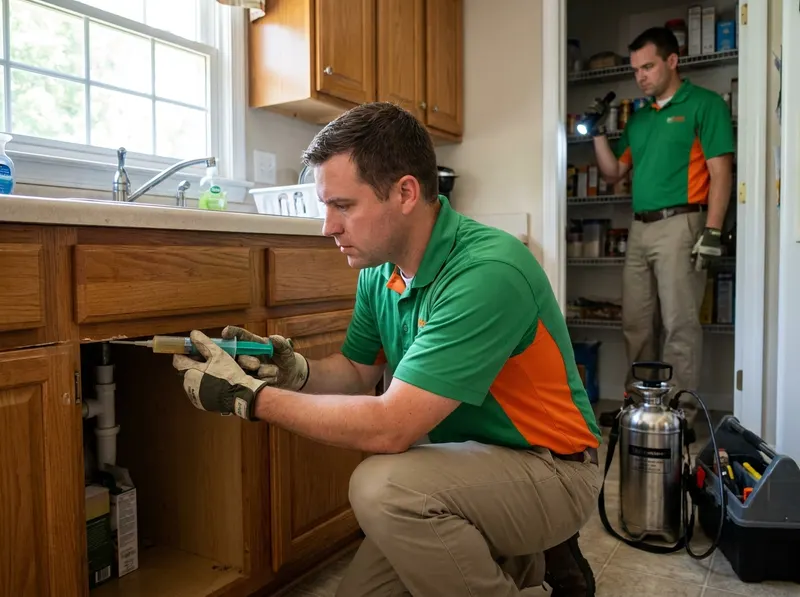
Cockroach extermination targets both German cockroaches inhabiting interior food preparation areas and American or Oriental cockroaches breeding inside municipal sewer connections and damp crawlspaces. Treatment applies precision insect growth regulators (IGRs) and targeted indoxacarb or dinotefuran gel baits into structural voids, pipe chases, electrical switch junction boxes, and cabinet hinge mortises. This strategy stops nymph maturation, eliminates allergen-producing frass, and achieves rapid population reduction inside high-humidity environments. Follow-up mechanical flushing with botanical pyrethrin concentrates dislodges female egg cases from deep cracks. By avoiding indiscriminate baseboard sprays that cause chemical scattering, technicians achieve complete colony collapse within 21 to 30 days while safeguarding indoor air quality and food contact surfaces.
Get a quote →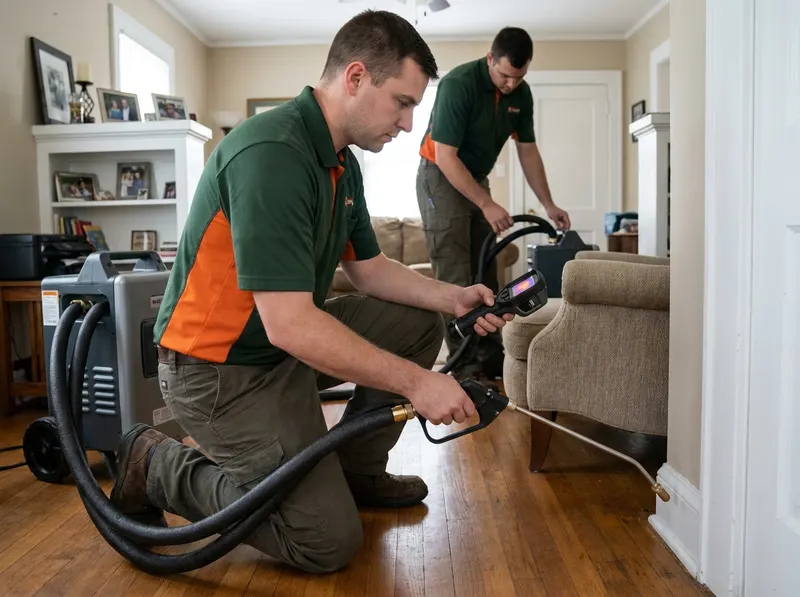
Bed bug eradication eliminates active Cimex lectularius colonies utilizing controlled structural heat systems combined with botanical insecticidal dusts. Equipment elevates the ambient room temperature to a sustained 122°F to 135°F for several hours, penetrating furniture joints, mattresses, baseboards, and electrical faceplates. This treatment delivers lethal internal temperatures to both adult specimens and viable eggs in a single operational visit. High-output convective heating units circulate forced thermal currents throughout wall voids, structural studs, and deeply tucked upholstery fibers where chemical contact sprays fail to penetrate. Technicians supplement the thermal application with amorphous silica gel desiccant dust injected behind electrical outlet plates and hollow door frames, creating a long-lasting physical barrier that desiccates any migrating bed bugs over subsequent weeks.
Get a quote →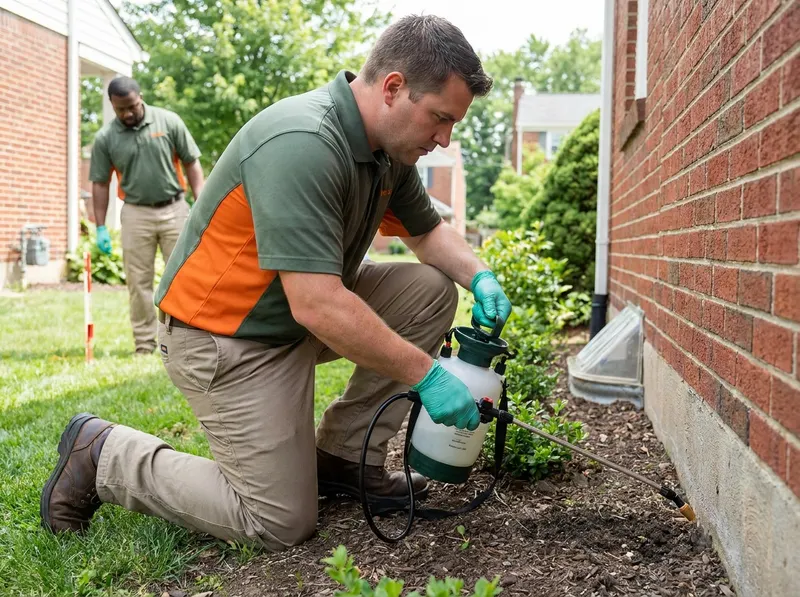
Ant colony elimination stops structural timber damage caused by black carpenter ants and eradicates persistent foraging trails of odorous house ants and pavement ants. The protocol identifies satellite nesting chambers inside damp window framing, sill plates, and exterior tree cavities before applying slow-acting fipronil liquid bands around exterior foundation zones. Foraging worker ants carry the undetectable, non-repellent material back to the reproductive queen, leading to the collapse of the complete subterranean nest network. Technicians trace moisture vectors around roof gutters, chimney flashing, and landscape railroad ties to locate primary parenthood nests. By addressing moisture wood rot and treating underlying aphid colonies with target-specific biological treatments, this approach terminates the ant population while eliminating exterior food attractants.
Get a quote →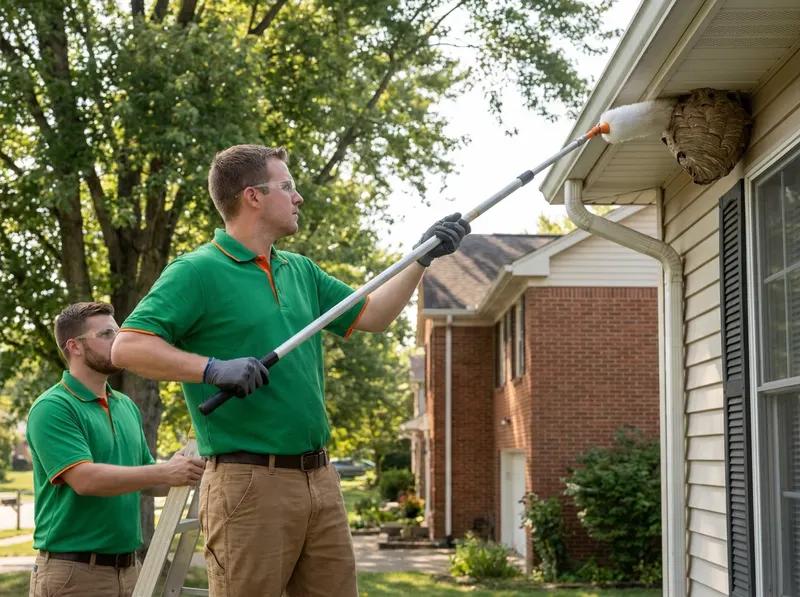
Stinging insect removal extracts bald-faced hornet aerial structures, subterranean yellowjacket nests, and paper wasp colonies from eaves, soffits, and landscape perimeters. Technicians use micro-injected botanical freezing aerosols alongside physical vacuum extraction during dusk or early morning hours when target populations gather inside the nest. Once removed, technicians apply residual pyrethroid barriers to the mounting site to prevent re-establishment during the warm months. For ground-nesting yellowjackets often nesting in abandoned rodent burrows or retaining wall weep vents, technicians inject pressurized insecticidal dusts directly into subterranean tunnels to eliminate deep queen chambers without damaging root systems or disturbing ornamental garden beds.
Get a quote →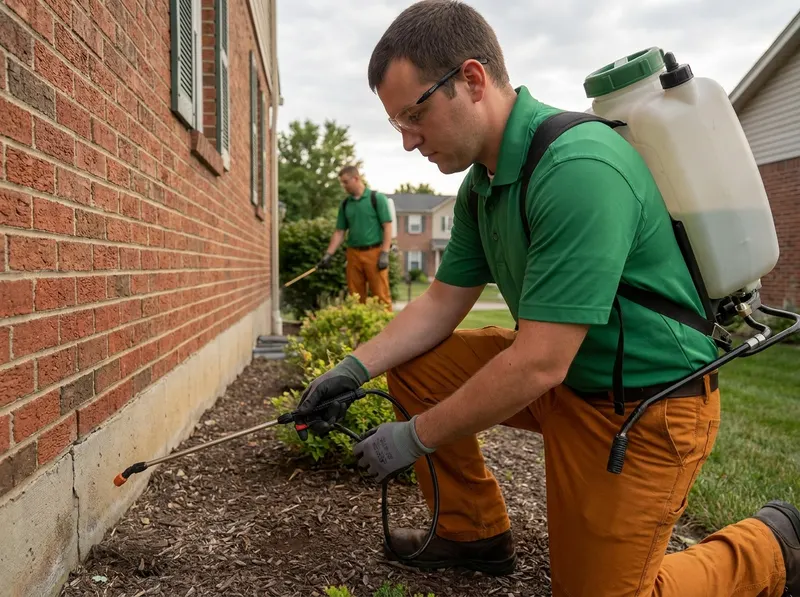
Occasional invader defense creates an external residual shield against brown marmorated stink bugs, boxelder bugs, multi-colored Asian lady beetles, and centipedes before they migrate indoors during autumn chill. Technicians apply microencapsulated exterior treatments around door thresholds, basement light wells, siding joints, and window casings. This perimeter application repels crawling arthropods and stops indoor aggregations before outdoor temperatures drop below freezing. Field specialists calibrate spray pressure to treat exterior vertical surfaces up to ten feet high, concentrating on sunny southern and western exposures where overwintering insects congregate. This comprehensive exterior barrier avoids the need for broad-spectrum interior chemical treatments, keeping living spaces completely odor-free and protected from seasonal indoor clustering.
Get a quote →Commercial kitchen pest management delivers documentation-heavy biological defense protocols for restaurants, food processing plants, and hospitality facilities. Following standards established by the Food and Drug Administration Food Safety Modernization Act , treatments utilize pheromone traps, non-toxic mechanical glue boards, and targeted wall void dustings. Detailed service logs verify regulatory compliance and maintain clean inspection ratings. Technicians conduct bi-weekly or monthly visual inspections focusing on drain lines, floor sinks, refrigeration motor housing units, and food storage shelving. Implementing insect growth regulators and enzymatic drain treatments removes organic slime layers, preventing the breeding cycles of drain flies and fruit flies without disrupting active culinary kitchen shifts.
Get a quote →You get a firm, itemized quote for your pest control sevice before any work begins, no surprises, no pressure.
Careful prep, tidy work, and a full cleanup when we are done. We treat your home and belongings like our own.
The same trusted, background-checked team from the first call to the final check.
Property owners facing structural insect or rodent activity must evaluate chemical barrier treatments against targeted physical exclusion. gov/divisions/plant-health/pesticides">Ohio Department of Agriculture Pesticide Regulation guidelines; this arrests underground queen viability across deep clay strata. If your building exhibits indoor attic scratching, droppings, or compromised electrical wiring from roof rats or deer mice, select mechanical exclusion and targeted interior trapping.
The trade-off centers on upfront capital expenditure versus ongoing perimeter vigilance: liquid soil termiticides carry a five- to seven-year subterranean residual profile with higher initial labor investment, whereas exclusion work requires careful structural sealing of historic brick, stone mortar, and soffits. If you observe bed bug populations inside mattress seams or behind baseboards, choose thermal structural remediation combined with desiccant dust applications instead of repeated chemical fogging. Thermal interventions achieve a 100% insect mortality rate across all life stages within eight hours, though they demand extensive indoor preparation.
For nuisance exterior invaders like odorous house ants or brown marmorated stink bugs, apply targeted microencapsulated perimeter band sprays twice annually; this avoids interior chemical exposure while providing continuous seasonal control. Step 1 involves executing a thorough 45-point perimeter inspection of all masonry lines, foundation vents, and roof junctures. Step 2 requires confirming target species morphology through microscopic or localized visual diagnostic criteria.
Step 3 deploys direct extraction, mechanical sealing, or specialized chemical compound placement tailored to the building construction. Step 4 institutes a 14-to-30-day biological evaluation audit to ensure complete colony termination without secondary pest resurgence.
Every project gets a firm, written price after an on-site visit. Ranges below for orientation.
Tell us about your pest control sevice job and we'll send a clear, written quote, usually the same day. Or just call and talk to a real Cincinnati pro.
(513) 812-8085
Properties across Cincinnati face unique structural pest threats driven by dramatic river valley topography, limestone bedrock humidity, and an exceptionally dense concentration of historic 19th-century brick, stone, and heavy-timber framing. In neighborhoods like Over-the-Rhine, Mount Adams, and Clifton, century-old rubble stone foundations and soft-lime mortar joints undergo gradual shifting, opening subterranean fissures through which Norway rats and subterranean termites penetrate building envelopes from damp surrounding soil. Moisture retention in the glacial drift soils of Hamilton County along the Ohio River basin sustains massive subterranean termite colonies, demanding deep-trench perimeter treatments that reach below the local frost line. Furthermore, mature urban tree canopies surrounding public parks such as Eden Park, Ault Park, and Spring Grove Cemetery and Arboretum generate intense seasonal migrations of wood-boring black carpenter ants and stinging yellowjackets, which frequently nest beneath aging roof eaves, wood siding, and soffits. During the late summer and autumn months, humidity changes across the Interstate 71 and Interstate 75 corridors drive brown marmorated stink bugs and boxelder bugs out of tree canopies into heated attic spaces. Commercial properties around Findlay Market face high cockroach and rodent pressures due to high-density food handling infrastructure and interconnected municipal sewer networks. DesertCrown Pest Services calibrates every application protocol to these hyper-local architectural realities, neutralizing active insect colonies while preserving the historic masonry integrity of southwestern Ohio properties.
 DesertCrown Pest Services